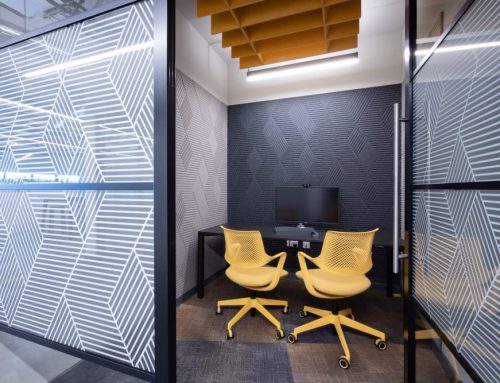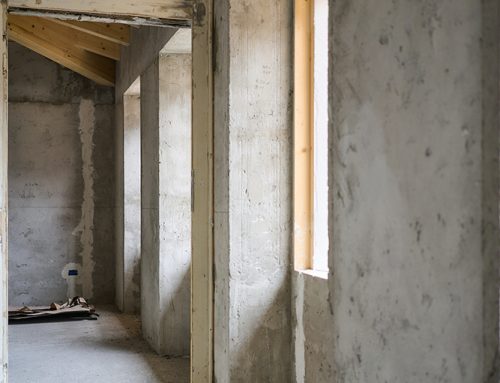
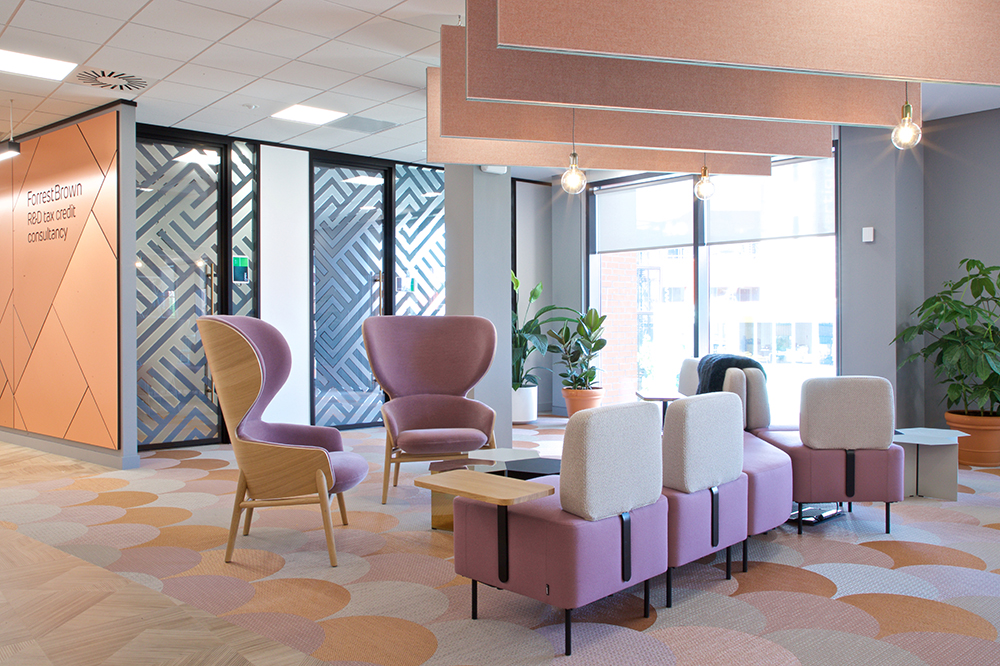
In the Wylde blog this week we’re starting our April insights thinking about the integration of acoustics. Acoustics are one of the most influential yet often underestimated aspects of interior design. While visual impact tends to take centre stage, the way a space sounds plays an equally critical role in how it is experienced. In workplace environments especially, poor acoustics can affect concentration, productivity and overall wellbeing. At Wylde, we approach acoustic design as a fundamental part of the design process, ensuring it is considered from the outset and fully integrated into each scheme.
Sound within a workplace is rarely static. It shifts throughout the day, shaped by movement, conversation and activity. Without careful planning, this can lead to an environment that feels disruptive and fatiguing. Our approach is to design spaces that support a variety of working styles, balancing collaboration with moments of quiet focus. To achieve this, we collaborate with specialists such as ALTO acoustics, bringing technical expertise into the design process to refine performance alongside aesthetics.
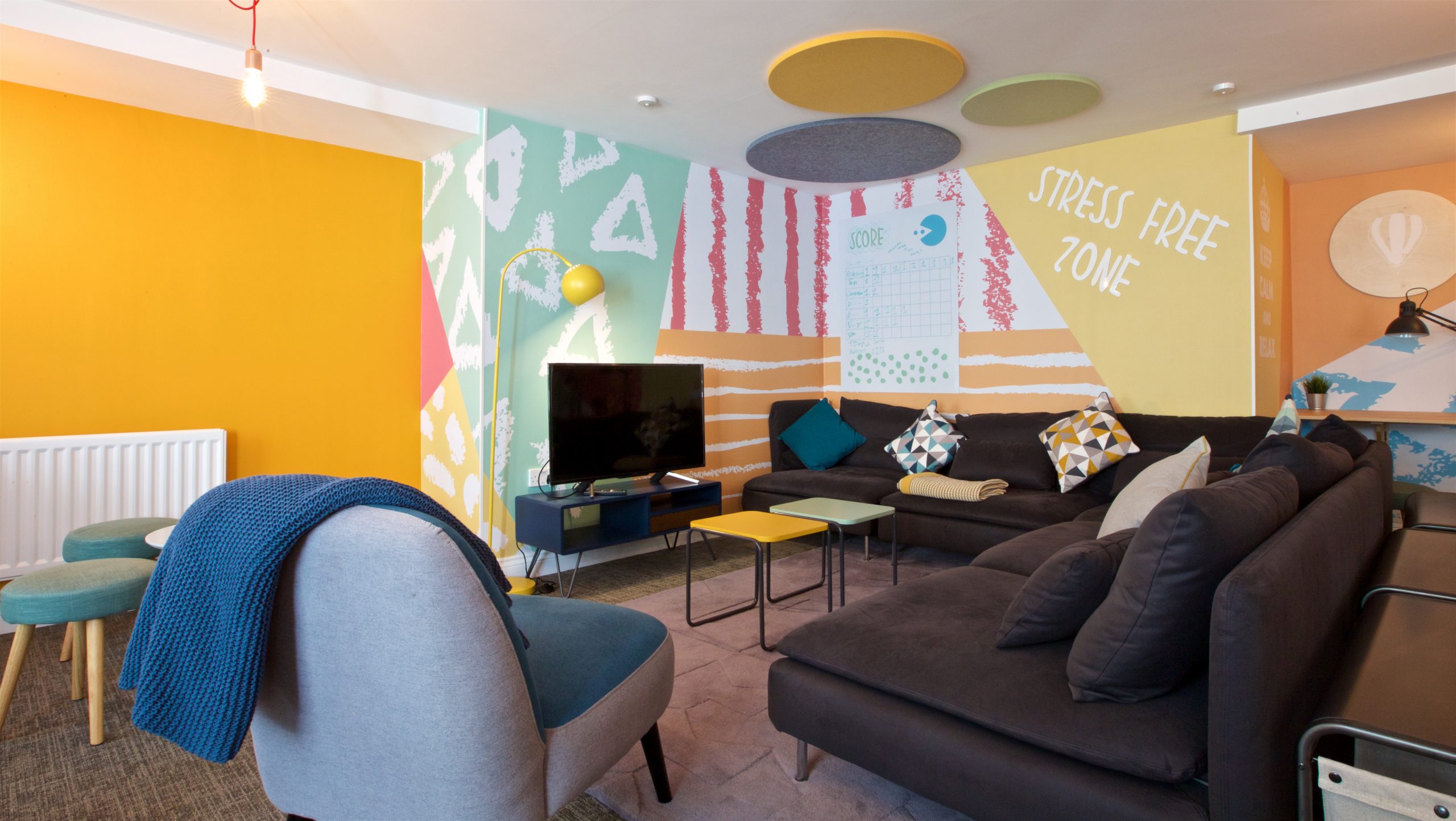
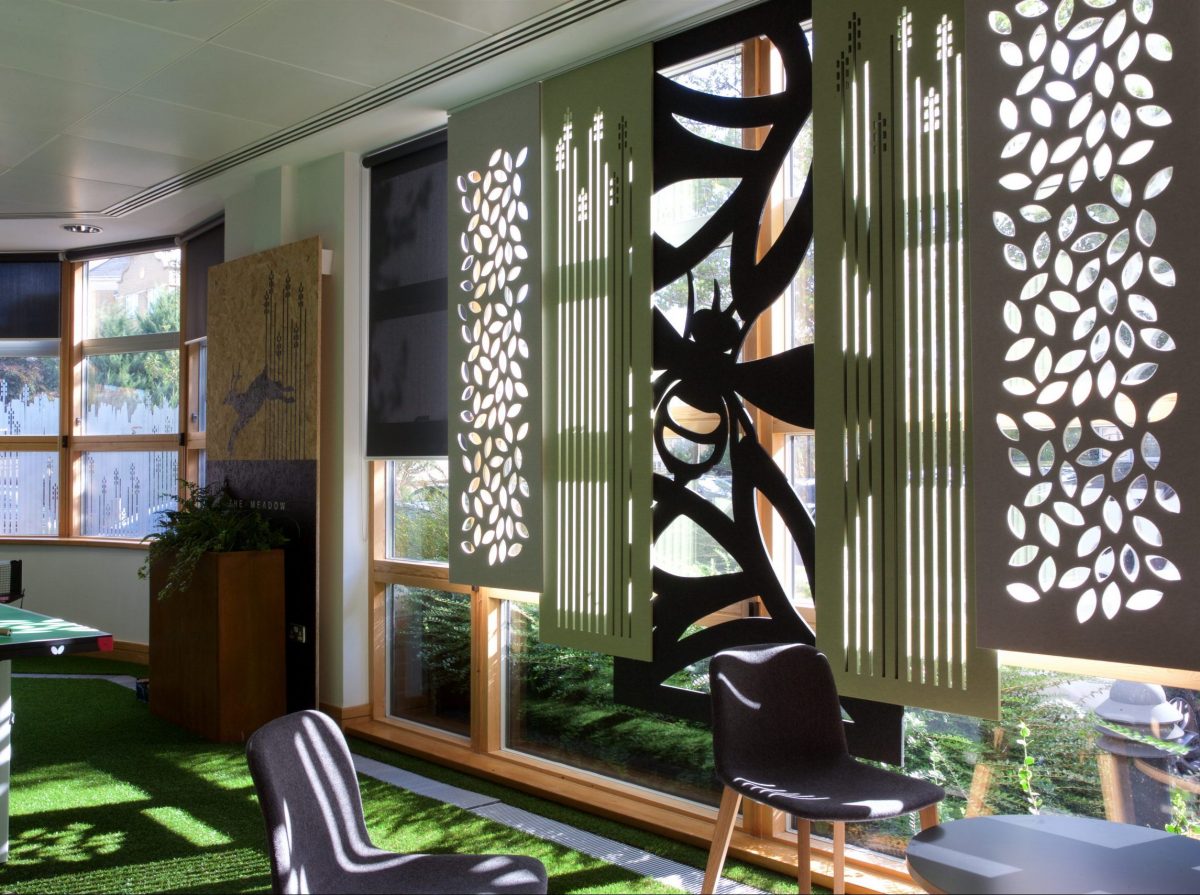
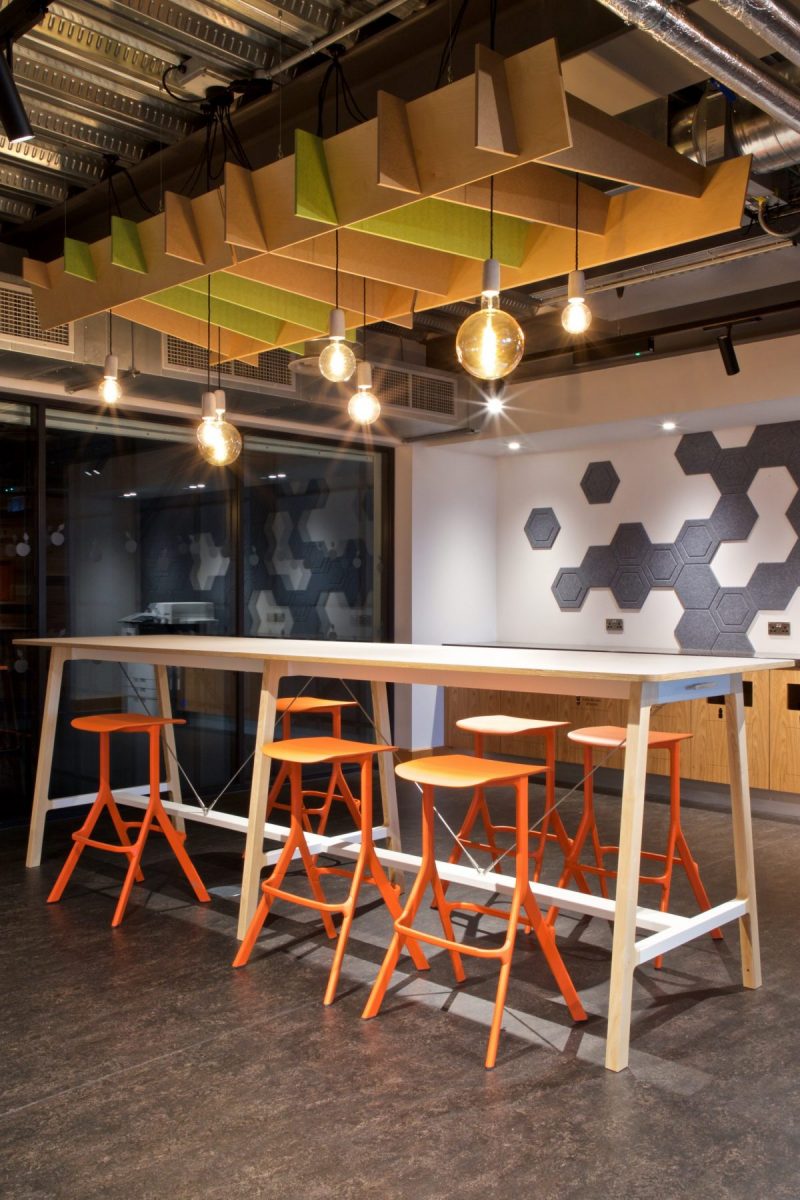
Acoustic panels are a key component in this process. Far from being purely functional additions, they are used as design elements in their own right. Across multiple workplace projects, we have integrated acoustic solutions into the architectural language of the space – embedding them within walls, ceilings and bespoke joinery so that they feel intentional and cohesive rather than applied.
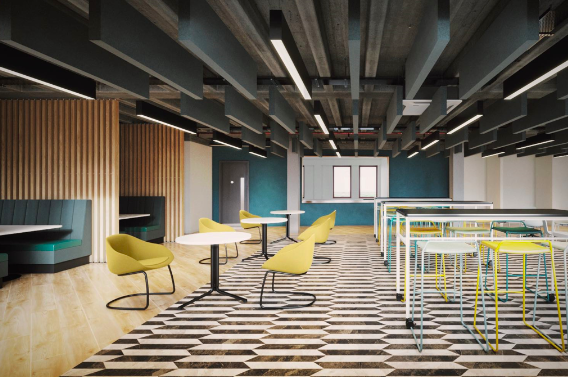
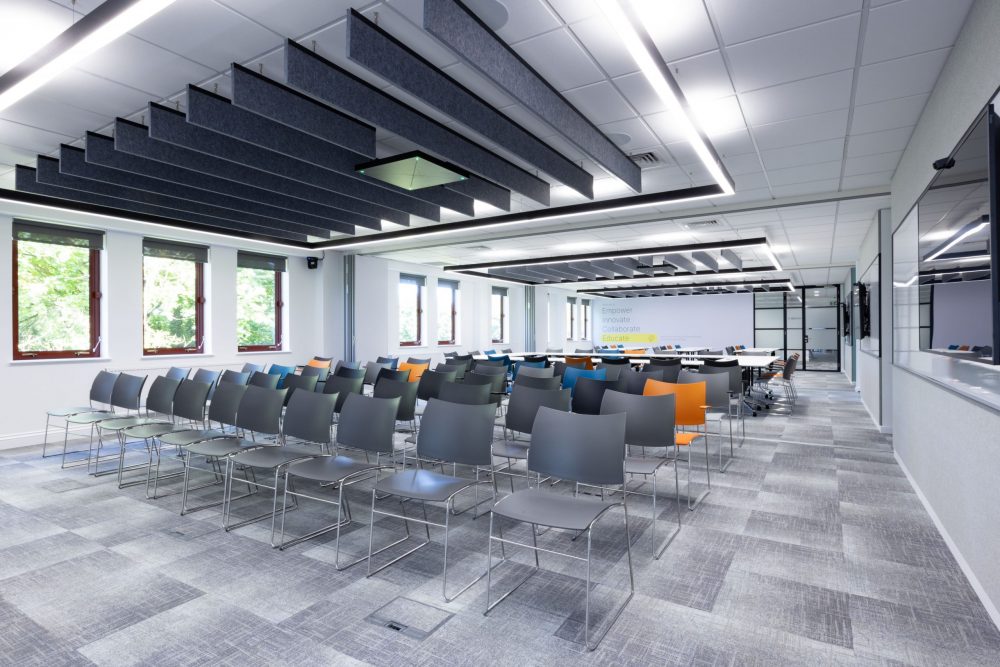
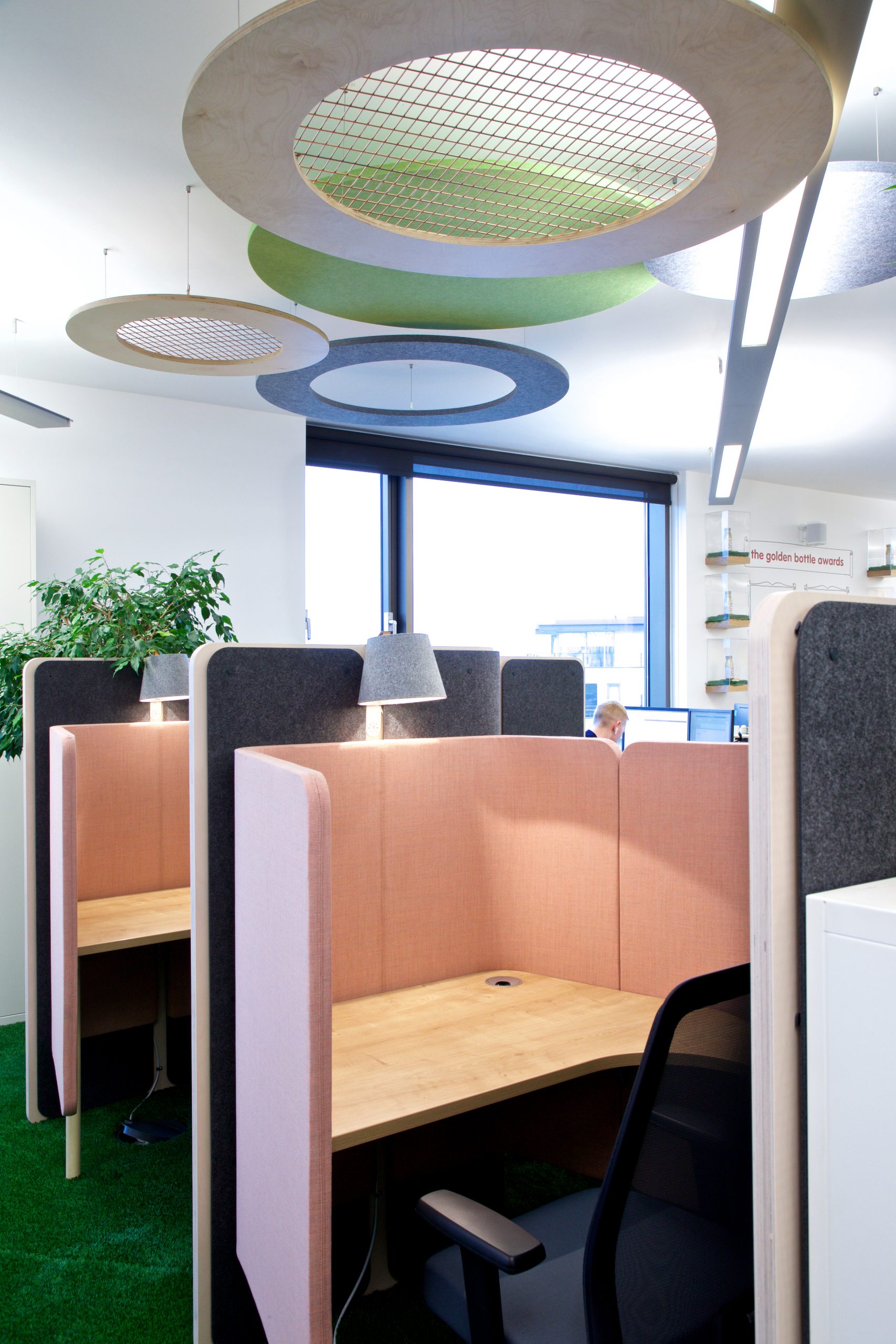
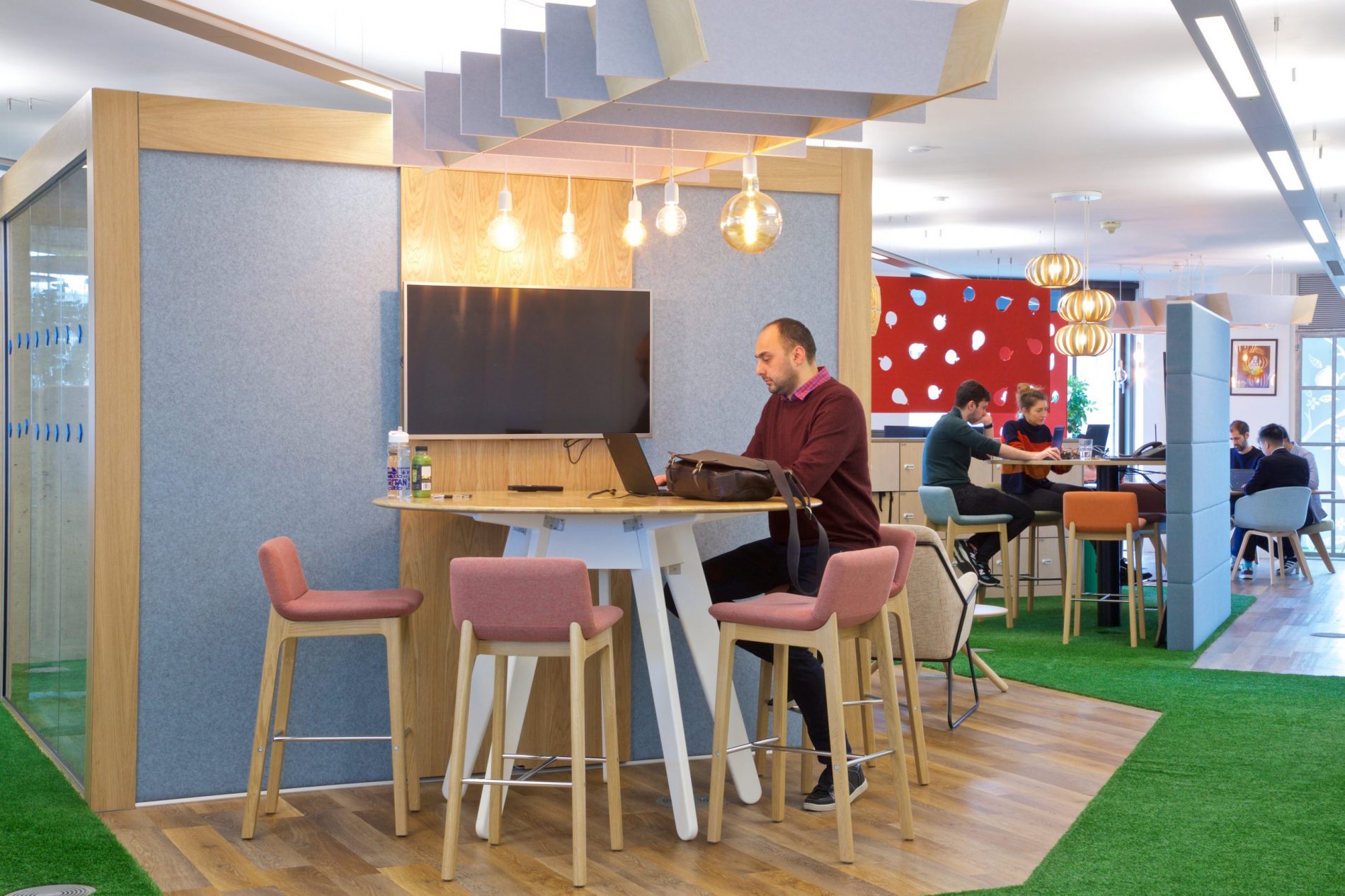
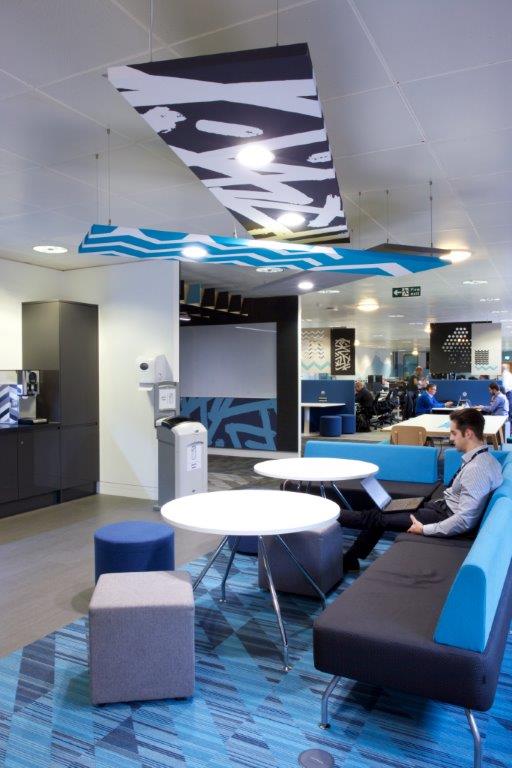
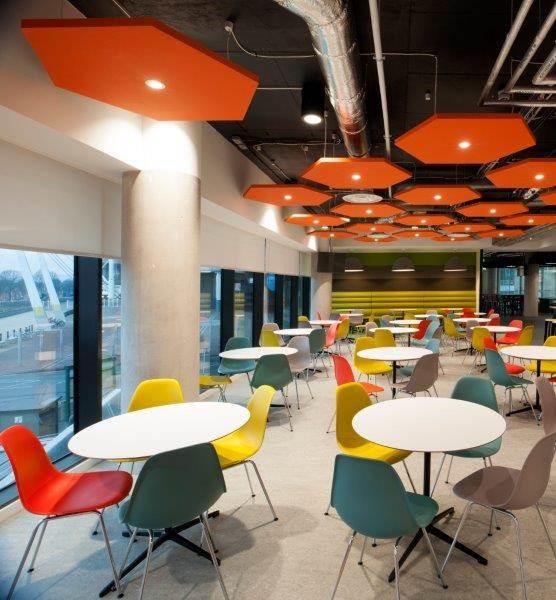
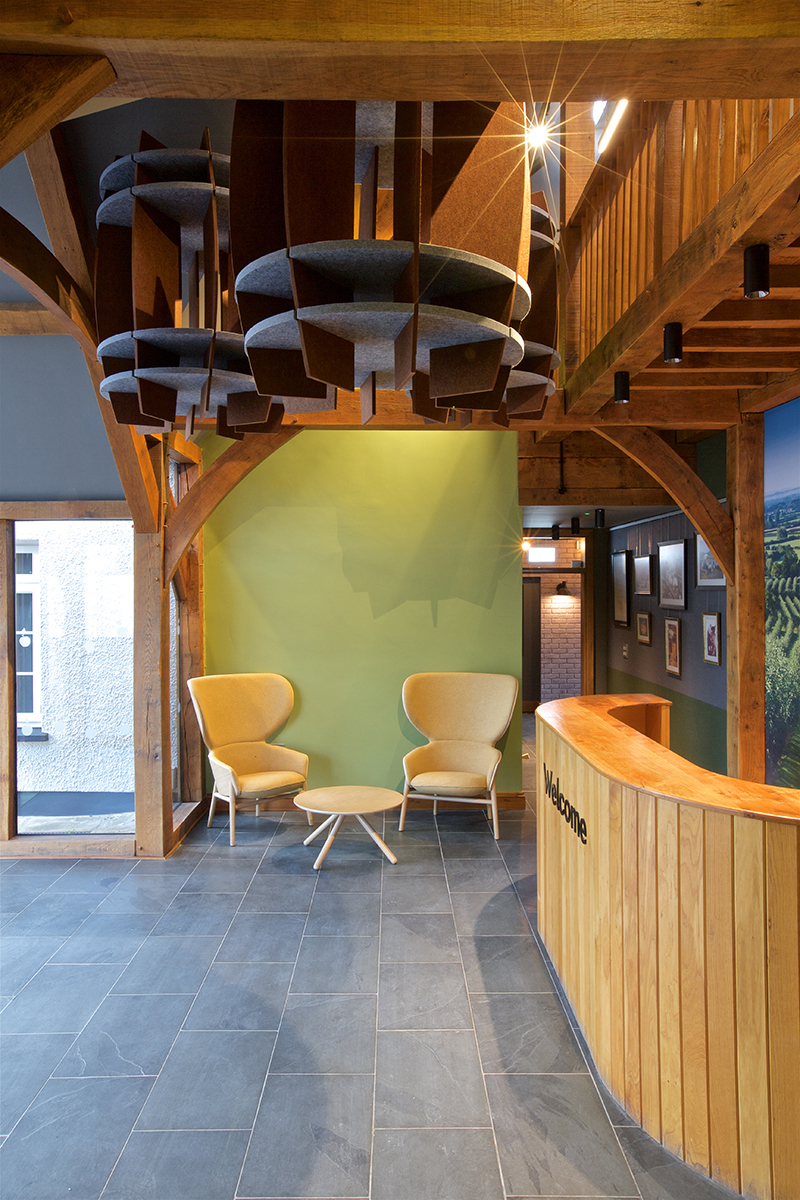
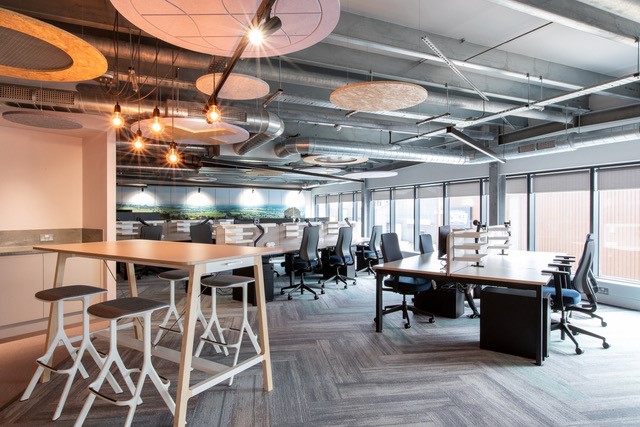
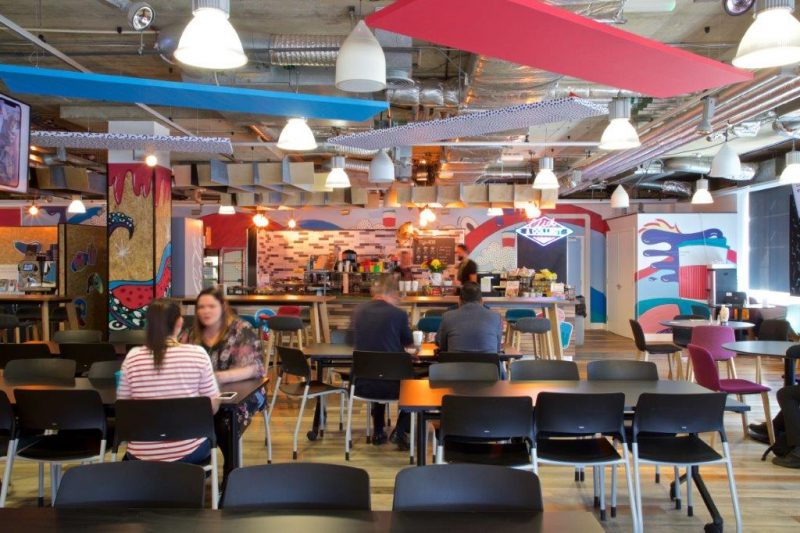
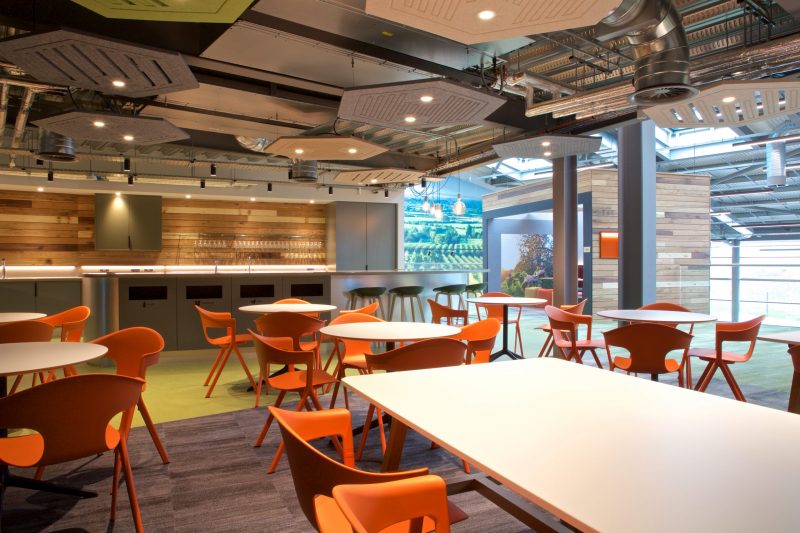
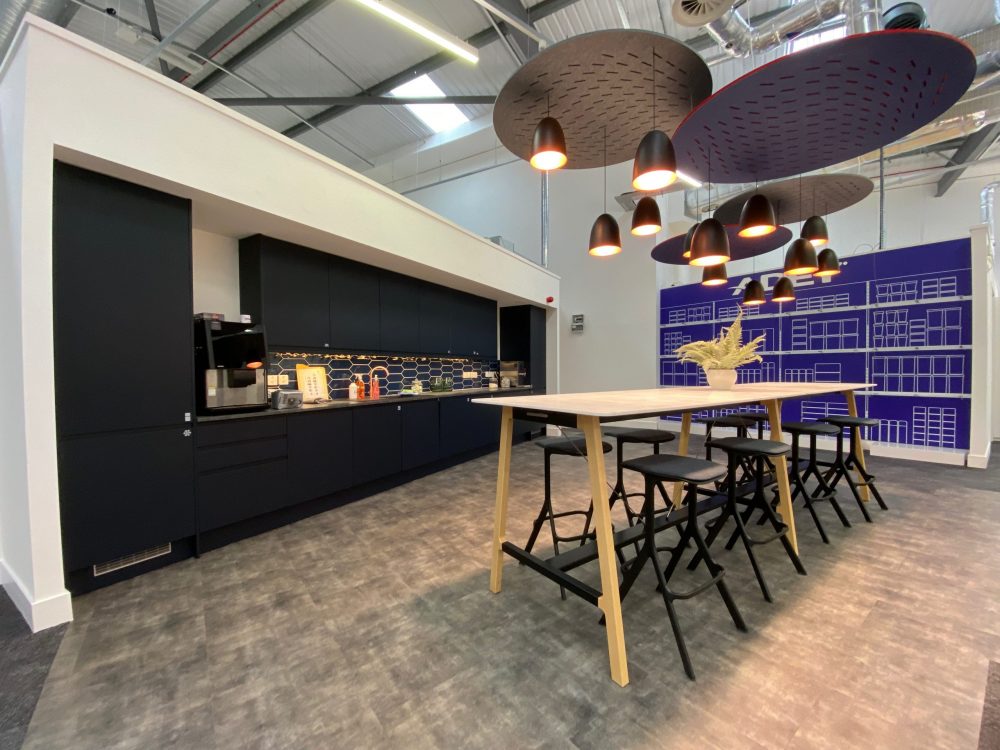
In open-plan offices, where noise levels can quickly build, ceiling-based solutions such as baffles or rafts are often introduced. These are carefully aligned with lighting and spatial planning to create a consistent visual rhythm while significantly improving sound absorption. In a number of schemes, this approach has helped define different zones within a single open space, subtly guiding how the environment is used without the need for physical barriers.
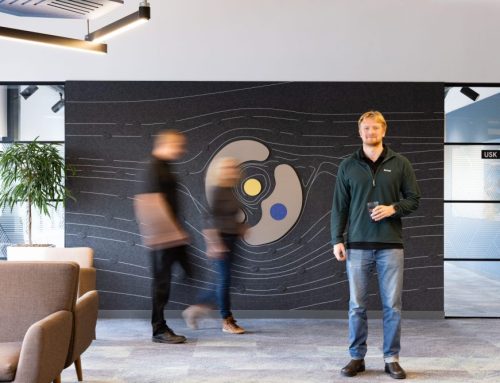
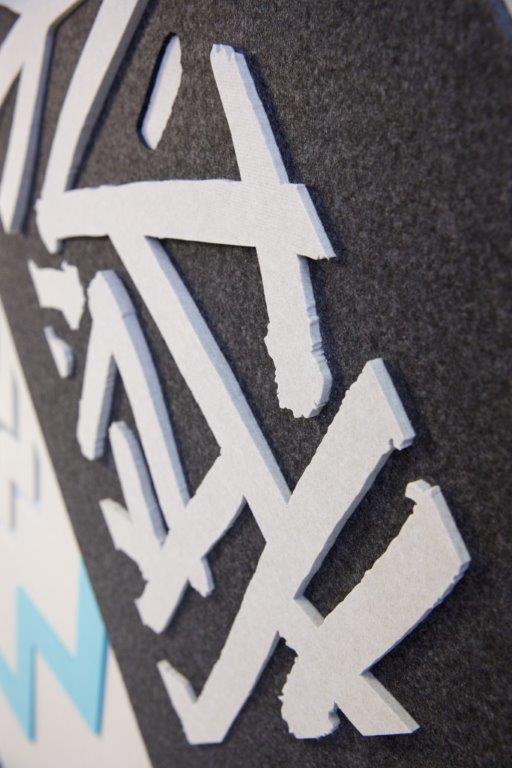
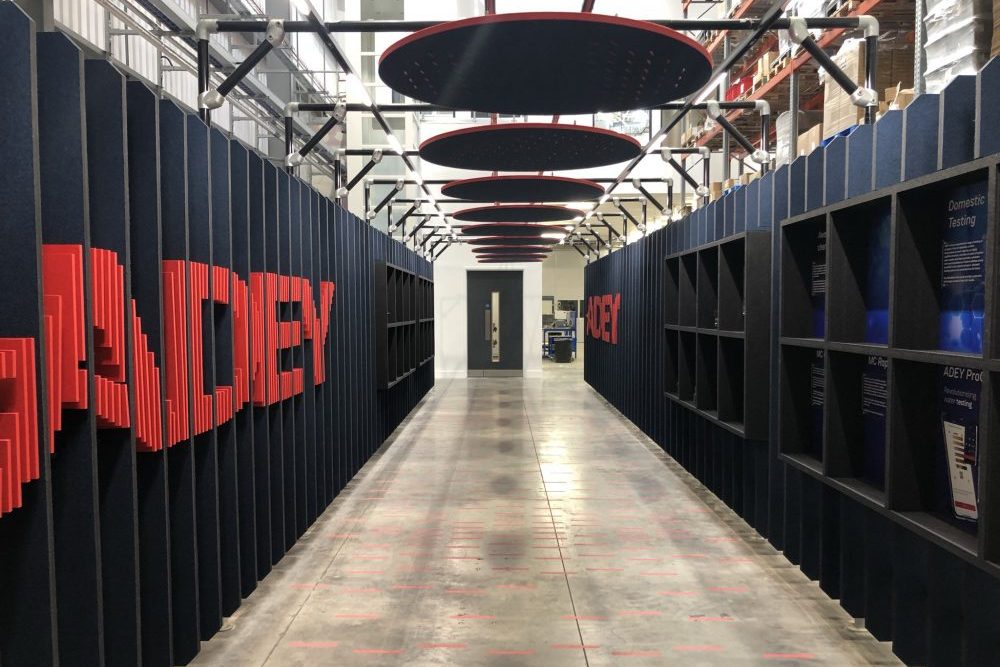
Wall-integrated acoustic panels provide another opportunity to combine performance with design expression. We frequently use large-scale acoustic wall treatments as focal points, introducing texture, depth and colour while improving speech clarity. Meeting rooms and breakout areas particularly benefit from this approach, as it allows for a sense of enclosure and privacy without compromising on aesthetic quality.
Materiality is central to how these solutions are perceived. We select finishes that align with the wider design narrative, whether that’s the warmth of timber slats, the softness of upholstered panels or the clean lines of more minimal systems. These materials not only enhance acoustic performance but also contribute to the overall atmosphere of the space, ensuring that functionality and design intent are always working together.
Flexibility is also an important consideration in modern workplace design. Many of the acoustic systems we work into our schemes are modular, allowing spaces to evolve over time. This adaptability supports changing team dynamics and working patterns, ensuring that acoustic performance can be maintained as layouts shift and requirements develop.
What defines our approach is the seamless integration of these elements. Acoustic panels are never treated as an afterthought; they are embedded within the design from the beginning, contributing to both the visual identity and the performance of the space. Through ongoing collaboration with our trusted partners and suppliers, we are able to deliver environments that are not only visually engaging but also acoustically balanced.
Ultimately, well-considered acoustics create a sense of comfort that is often felt rather than noticed. By integrating acoustic panels thoughtfully, we design workplaces that support focus, communication and wellbeing – spaces that perform quietly and effectively in the background of everyday working life. Check out our acoustics gallery – showing the variety of different ways panels can be integrated into a scheme, all our own of course!
-
- University of Bristol – Wylde ia
-
- Wylde ia – Innocent Fruit Towers
-
- Wylde ia – Innocent Fruit Towers
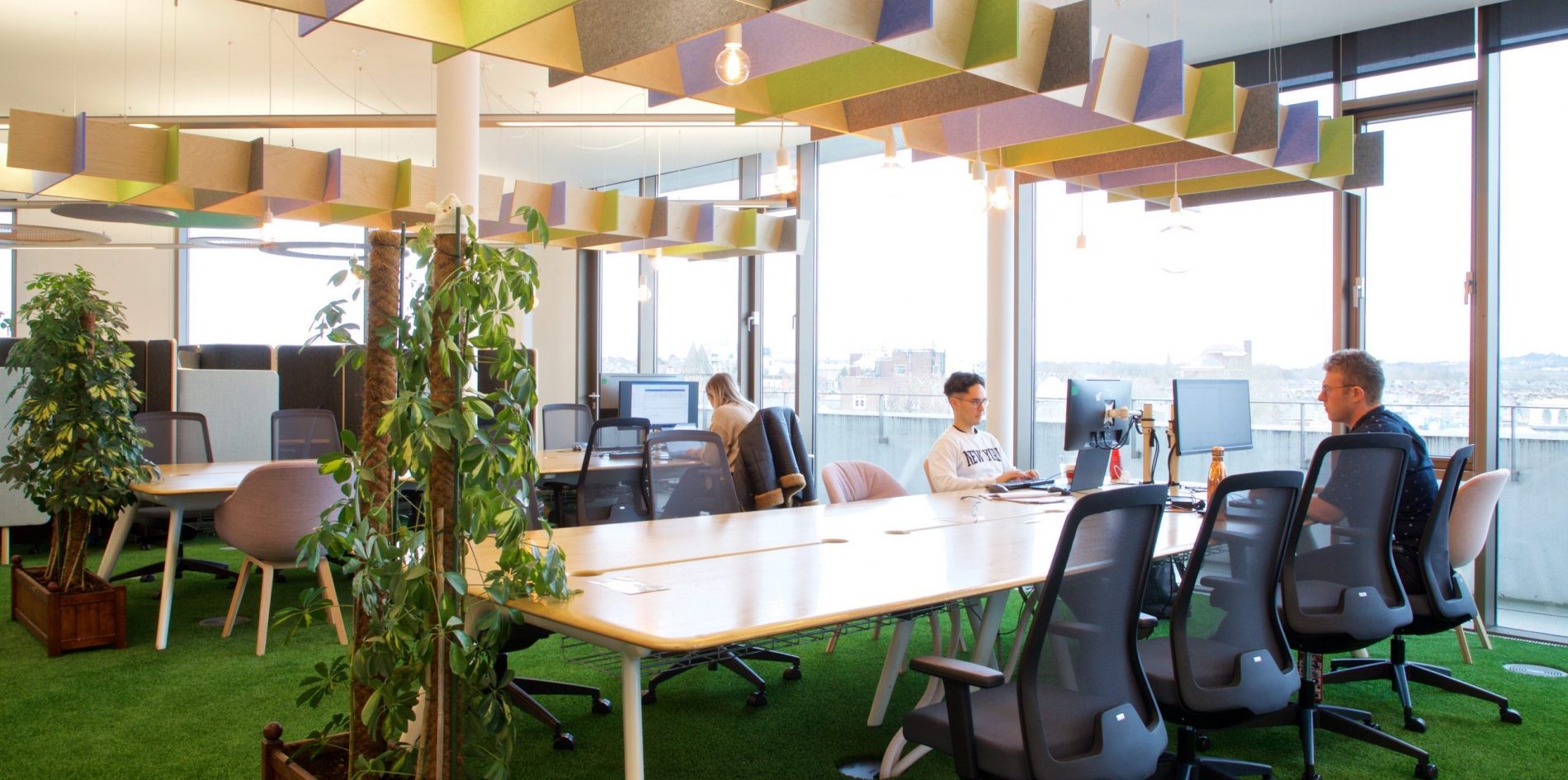
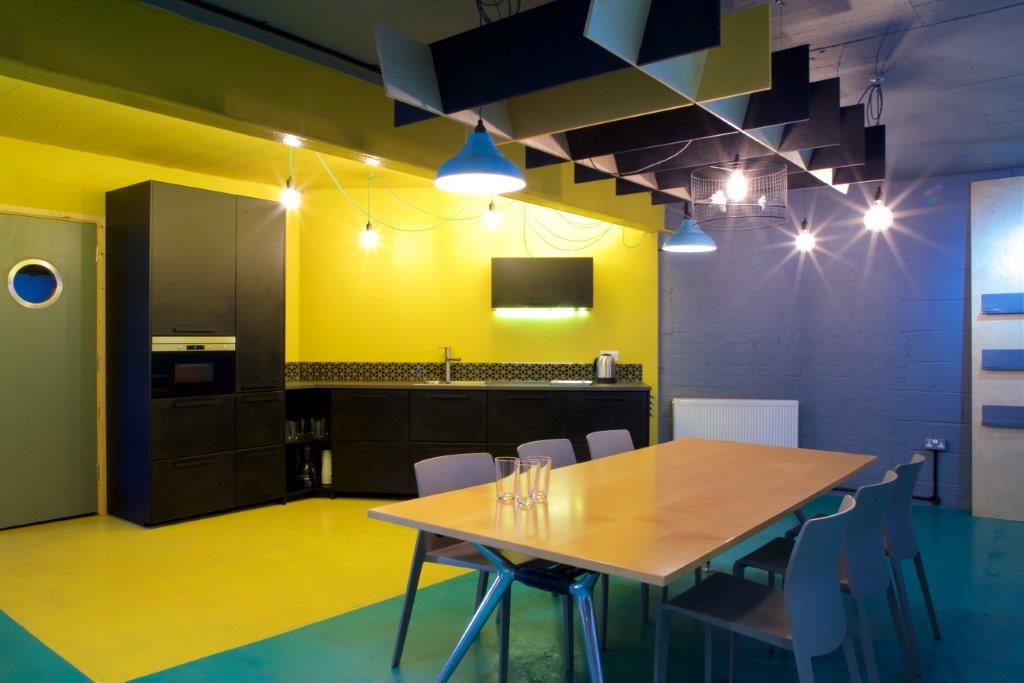
-
- Wylde ia – Innocent Fruit Towers
-
- ‘3’ Reading
-
- Wylde ia – Thatchers HQ
-
- Wylde – Moto Novo
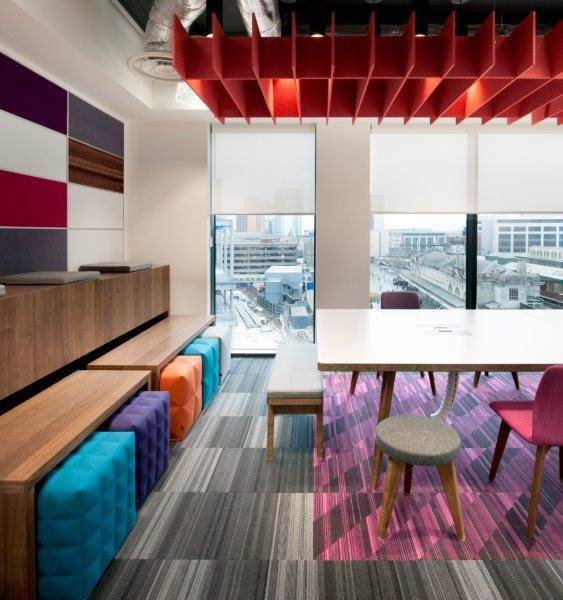
-
- Wylde ia – Thatcher’s Farmhouse
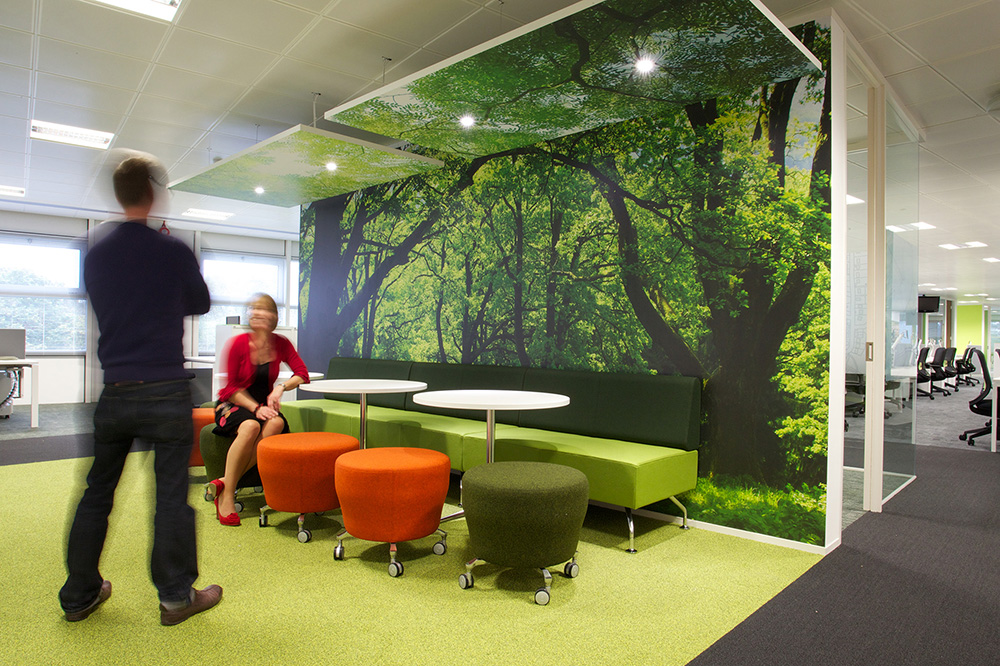
-

- Wyke Farms
-
- Wylde – H3G
-
- Wylde ia Thatchers HQ
-
- SWLEP